Seen in Jeonju

Korean Films 1970 (91-100)

4th July 2009

70-9170-9270-9370-9470-9570-9670-9770-9870-9970-100

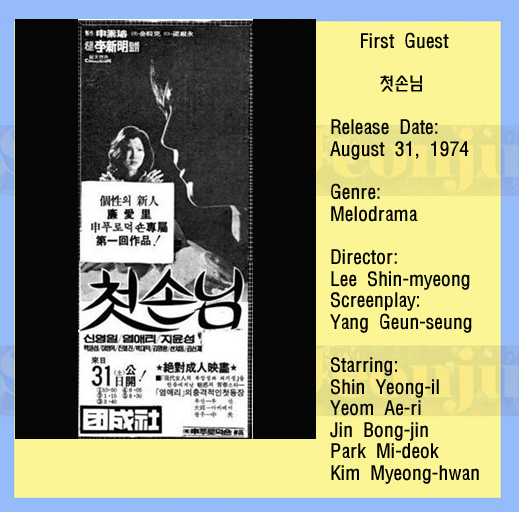
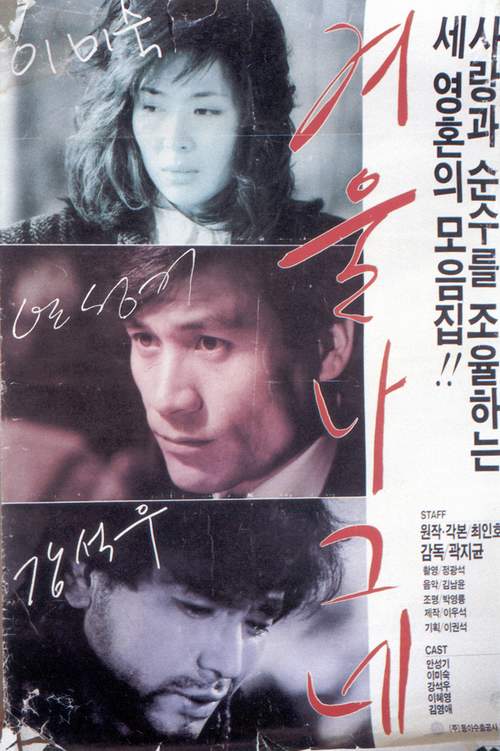
Here are the next ten films produced in Korea in 1970. Click the thumbnail and then expand the image to see the full-sized plate.

And..today is July 4th. That means that it is the second anniversary of Seen In Jeonju.  I think that is a reason for me to celebrate!

Posted in *film index-1970 | No Comments »

List of Film Festivals in Korea

1st July 2009

film fest posters

For being a relatively small country, Korea has a lot of film festivals. Of course, most people have heard of the big three, Pusan, Jeonju and PiFan but I seem to be hearing about a new festival every month–or learning about ones I did not know existed, and I got to wondering just how many film festivals there are in Korea. A quick search on the Korean search engine Naver revealed 95, but a closer inspection showed that was not the actual number. Many of the ones listed were just one-shot events or had folded a few years ago. Some were film awards and others were events held at a certain art theater. However, the list is still quite long. If you are coming to Korea pretty much any time of year, you are likely to be able to attend a film festival. Here is the list of current festivals below. I may have missed some and I have included three others that I am not sure are still running, but it is accurate for the most part.

Seoul Independent Documentary Festival www.sidof.org (usually March. Not held this year?)

International Women’s Festival in Seoul http://wiffis.or.kr (April 9-16)

Jeonju International Film Festival www.jiff.or.kr (April 30-May  8th)

Busan Asian Short Film Festival www.basff.org (May 5-13)

Green Film Festival in Seoul www.gffis.net (May 21-26)

Seoul LGBT Film Festival (aka Korean Queer Film Festival)  www.selff.com (May 30-June 7)

Human Rights Film Festival www.sarangbang.or.kr/hrfilm/ (June 11-14)

Mise-en-Scene’s Genre Film Festival www.msff.or.kr (June 24-30)

Seoul International Film Festival www.senef.net (usually held in June, but not this year)

Seoul International Youth Film Festival www.siyff.com (July 9-15)

Pucheon International Fantastic Film Festival www.pifan.com (July 16-26)

Migrant Worker Film Festival www.mwff.or.kr (July 17-19)

Jecheon International Music & Film Festival www.jimff.org (Aug. 13-18)

Busan International Kid’s Film Festival www.biki.or.kr (August 14-18)

Cinema Digital Seoul Film Festival www.cindi.or.kr (August 20-26)

Chungmuro International Film Festival www.chiffs.kr (August 24-Sept. 1)

Jeju Film Festival www.jff.or.kr (late August)

Corean Network Film Festival www.cnff.or.kr (late August)

KBS Premiere Picture Festival http://premiere.kbs.co.kr (late August/early Sept)

Experimental Film and Video Festival in Seoul www.ex-is.org (Sept. 10-16)

Indie Anifest www.ianifest.org (Sept. 17-22)

Persons with Disabilities Film Festival www.pdff.net (Sept. 21-25)

Seoul International Extreme Short Image & Film Festival www.sesiff.org (Sept. 23-27)

Seoul Christianity Film Festival www.sc-ff.org (late Sept.)

EBS International Documentary Festival (late Sept)

Sogang Film Festival www.sgff.net  (late Sept.)

Jeonbuk International Film & Video Festival www.jbiff.or.kr (Oct.)

Pusan International Film Festival www.piff.org (Oct. 8-16)

Korea Youth Film Festival www.kyff.co.kr (Oct. 11-15)

Seoul International Family Film Festival  www.sifff.org (Oct. 28-Nov.3)

Megabox European Movie Festival www.meff.co.kr (late October)

Korea Youth Film Festival www.dima.or.kr (late Oct/early Nov.)

Asiana International Short Film Festival www.aisff.org (Nov. 5-10)

Daejeon Independent Film & Video Festival www.difv.org (mid-Nov)

Daegu Independent Short Film Festival www.diff.or.kr (mid/late Novemeber)

International College Peace Film Festival (late Nov.) –currently has website problems

Pink Film Festival www.pinkfilm.co.kr (November–unclear if this is continuing this year)

Sth Lotte Cinema Art Film Festival (November)

Megabox Japanese Film Festival www.j-meff.co.kr (November)

Made In Busan: Independent Film Festival www.ifmib.org (late Nov/early Dec)

Seoul Independent Film Festival www.siff.or.kr (December)

Gwangju International Film Festival www.giff.org (December)

Posted in Uncategorized | No Comments »

Actress Do Geum-bong and Direrctor Yoo Hyeon-mok

30th June 2009

do geum-bongyoo hyeon-mok

This past month saw the passing of two great talents of the Korean movie industry, actress Do Geum-bong and Director Yoo Hyeon-mok. Both of them were household names in the heyday of their careers and they will always be remembered for their work captured on film. They will be greatly missed.

Do Geum-bong was born August 27, 1930 as Jeong Ok-soon. She began acting on stage at an early age but after finishing high school she readily switched to screen acting. She debuted in the year 1957 when she landed the title role in director Jo Geung-ha’s film Hwang Jin-yi. Over the course of her long film career, Do made more than 500 films–the vast majority between 1957 and 1980. However, although she appeared in hundreds of films, it is rare to see her in the role of lead actress. This is partly because she appeared older than her age and partly because of the numerous scandals that swirled around her. She was criticized for dating many actors at the time. She shocked society by not only moving in with an actor, but one younger than herself. And later in life, she raised eyebrows by divorcing her husband of twenty years. However, it is a testament to the strength of her character that she survived it all, especially considering the times she was living in.   Do’s most recognizable roles are from her Shin Sang-ok films, most notably Mother and the Houseguest (1961) where she plays the maid, Romance Papa (1960) in which she played the second daughter and in Chunhyang where she played the maid of the title character. Her last film was in 1997, Trio (sometimes listed as Threesome), directed by Park Chan-wook in which she is listed fourth in the credits as ‘old woman of Jeondangpo’.

Yoo Hyeon-mok was born on July 2, 1925 in Bongsan, Hwanghae Province now part of North Korea. He attended Dongguk University in Seoul, majoring in Korean Literature. It is said that he became inspired to make films after viewing Viva Freedom (1946), the first Korean movie made following liberation from Japan. He had been working on a scenario which was picked up and turned into the film The Final Temptation by Jeong Chang-hwa in 1953.  In 1955, Yoo appears in the credits in Lee Gyu-hwan’s version of The Story of Chunhyang as an assistant director. He debuted as a director in his own right the following year with the film Sadness is Heredity. Although he directed a relatively small number of films compared with his contemporaries, only 41 in the course of his career, he remains one of the most recognized names in the Golden Age of Korean Cinema. This is due to the quality of his work. He is most famous for making the film Obaltan (often called The Aimless Bullet) in 1961 and School Excursion in 1969. He more than once found himself at odds with the strict censorship laws of the mid/late 1960’s and at the screening of his recently rediscovered film Empty Dream (1965) at PiFan a few years ago, Yoo recalled how he was jailed and fined for violating obscenity laws as it appears to actress her naked back. His final film was released in 1995, Mom, the Star and the Sea Anemone.

Posted in actors' profiles, director | No Comments »

Korean Box Office: June 26-28

29th June 2009

062606282009

I don’t want to talk about this box office….  More than 80% of the total audience on a single film?  Ugh.. 

———-Coming this Week to Korean Theaters———-

kingkong coachunknown woman

King Kong Coach (kr)- d. Park Geon-yong, starring Lee Beom-su, Jo An www.kingkong2009.co.kr  <King Kong Coach is not the official English title–It is only what I am calling this film until I learn what the title is>

Unknown Woman (it/fr)- d. Giuseppe Tornatore, starring Ksenia Rappoport, Michele Placido www.theunknownwoman.com

Posted in box office | 2 Comments »

Korean Films 1970 (81-90)

28th June 2009

70-8170-8270-8370-8470-8570-8670-8770-8870-8970-90

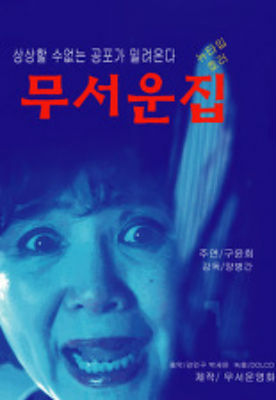
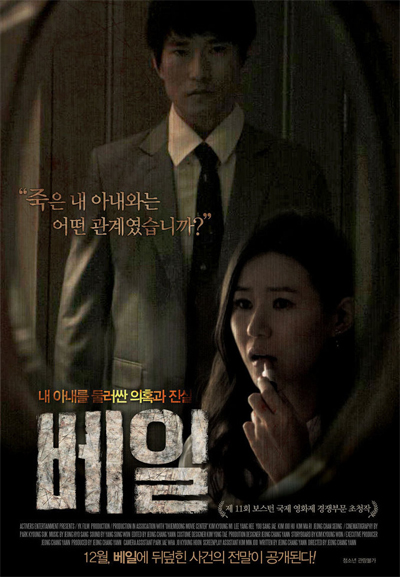
Here are the next ten films of the more than 230 movies produced in Korea in 1970. Click the thumbnail and then enlarge the image to see a full sized plate.

I have seen A Ghost Story of the Joseon Dynasty (plate 70-82) several times.  It was directed by Shin Sang-ok and is one of my favorite horror movies from the early 70s.  Next time I have a chance to see that film I will definitely write about it. More than likely, it will air on television over the summer when horror movies are generally shown in Korea.

Posted in *film index-1970 | No Comments »

Incoherence (1994)

27th June 2009

IncoherenceIn 1994, acclaimed director Bong Jun-ho debuted with two films. The first was an 18-minute film which translates as White-Colored Man and which featured some very impressive actors. The second was the film which I will review today, Incoherence. I had forgotten that I owned this 30-minute short as part of the My Beautiful Short Films II collection (available on DVD) but rediscovered it as I was screening shorts for a student workshop I had to teach.

Incoherence is divided into three episodes and a rather long epilogue. Episode one is entitled Cockroach.  It is the story of a professor who has sexual fantasies about his students. Between classes he reads pornography in his office. One day, he forgets the handouts he had prepared for class and sends his favorite student to get it..only to remember that he has left his porn out in the open on his desk. He calls a short break as he races after the student. Although she beats him to the office, he hurls a book across the room which lands squarely on top of the magazine, effectively concealing it. When the surprised student asks him why he threw the book, he makes up a lie about killing a cockroach.

Episode 2 is called Up the Alleys. It starts with a jogger of about 60-years of age in an expensive, coordinated track suit running through the quiet streets. He stops in front of a house, opens a carton of milk left by the milkman and talks with the young man who has come to deliver the paper. He offers the paperboy the second pint of milk that is sitting in front of the gate before he continues his jog. As the paperboy drinks the milk, the lady of the house comes out and is furious to find her milk gone. The stunned youth tries to explain that he thought the man who offered him the milk lived in the house, but the woman does not believe him as her milk has been disappearing daily and she cancels her subscription to the paper. The old man watches all of this from around the corner and chuckles to himself as he continues his run, only to unexpectedly encounter the paperboy again in the maze of backstreets. A chase begins, sometimes real, sometimes imagined by the old man who clearly is enjoying himself.

The Night of Pain is the title of Episode 3. In it, we meet a very drunk man trying to get home. A series of mistakes leaves him stranded somewhere far from his house in the unfortunate postition of having to use the bathroom. Although he is directed to a public toilet, he finds the door locked. He is about to perform his urgent business in a less than appropriate place when he is caught by the night guard.  The short tempered guard hands him an old newspaper and tells him to crap on that in the basement, fold it up and throw it in the dumpster (like he has to do each night). When the man indignantly goes to the basement, all the while shouting “Do you know who I am,” he discovers that the cellar is where the night guard lives. There is a bed and a small kitchen set up there for him. Viewing this, the man gets a positively evil (yet funny) idea.

The Epilogue is set up to reveal exactly who each of these characters are and why their offenses are so ironic. All three appear on a talkshow discussing what is wrong with society today and offering theories as to why crime is on the rise. Although they have their televisions turned on, none of the victims of these men are watching the program carefully enough to recognize the men as the perpetrators of the crimes against them.

Incoherence is an excellent short film with some black humor sprinkled throughout and a heavy dose of irony at the end as we see who each of the characters are and what their crimes mean. The only problem with the film occurs at the end with some topical issues being discussed in the talk show clearly being dated with the passage of time.  However, it is a good film and worth tracking down to see.

Posted in short film, review | 1 Comment »

Jeonju Digital & Independent Film Center

25th June 2009

JDIFC

I have been really remiss in not writing about this earlier. In late May the Jeonju Digital & International Film Center opened. Open every day except Monday, the Film Center screens independent and digital films two-four times a day (list of films posted below).  There is a gift shop of JIFF memorabilia including DVDs, t-shirts and other souvenirs. It also contains a database for searching indie films, an dvd screening area where independent films from around the world can be viewed and a library of film-related books.  I want to move in, but they won’t let me… 

Films are screened for 5,000 KRW, 4ooo for members and their library can be used for 1000.

The following is a list of films that will be screened for the remainder of June. I will post such a list at the beginning of each month.

Calling (kr)- d. Shin Hyeon-won, starring Kang Myeong-gwan, Shim Soon-ju. 72 min. (2009)

The Day After (kr)- d. Lee Sook-kyeong, starring Kim Bo-yeong, Ji Jeong-nam. 87 min. (2008)

The Room Nearby (kr)- d. Ko Tae-jeong, starring Jeong Yoo-mi, Ye Soo-jeong. 106 min. (2008)

Family Mart (kr) - d. Kim Geon, starring No Joon-ho, Kim Yeon-soo. 90 min. (2008)

The Story of Mr. Sorry (kr)- d. Kwak In-geun et. al., voices of Uhm Sang-hyeon, Jo Hyeon-jeong. 64 min. (2008)–animation

Members of a Funeral (kr)- d. Baek Seung-bin, starring Lee Joo-seung, Yoon Ha-bok, 99 min. (2008)

The website (currently Korean-language only) can be viewed here: http://theque.jiff.or.kr/

Posted in Uncategorized | No Comments »

Korean Box Office: June 19-22

22nd June 2009

061906222009

Whispering Corridors surprised me by taking the second place in this week’s box office–until I looked at the numbers are realized that it was a very slow weekend.  Running Turtle managed to hold the number one place. That film is based on a true story of an escaped murderer in 1997. Transformers 2 opens this coming week and it is opening without any competition. I haven’t seen Transformers 1 yet so I’ll wait until I do–sometime around the day when hell freezes over… However, I expect the movie will do very well.

———-Coming this Week to Korean Theaters———-

bandhobimissing lynxpope’s toilettransformers 2

Bandhobi (kr)-d. Shin Dong-il, Mahbup Alam Pollob, Baek Jin-hee http://blog.naver.com/bandhobi

Missing Lynx (sp/us)- d. Raul Gracia  <Korean dubbed, released as Lynx’s Adventure>

Pope’s Toilet (br/fr/ur)-d. Cesar Charlone, starring Cesar Troncoso, Virginia Mendez http://cafe.naver.com/inada

Transformers 4 (us)- d. Michael Bay, starring Shia LeBeouf, Megan Fox www.transformersmovie.co.kr

Posted in box office | 3 Comments »

Four Short Reviews of 60s Films

20th June 2009

60s

Just because I have been busy with the end of the semester for the past couple of weeks does not meet that I haven’t been watching movies. I just haven’t had time to write about them.  Recently I watched four older films from the 60s. Keep Quiet When Leaving and The Apron (not pictured), both from 1964, How’s Your Wife (1966) and The Old Potter (1969).   All of these are VERY melodramatic but I enjoyed most of them–the exception being How Is Your Wife for reasons I will get to.

The Old Potter was directed by Choi Ha-won. Previously I was not a fan of Choi having only seen his 1981 film The Invited Ones. That movie, about the persecution of Christian missionaries and converts in 18th Century Korea was far too heavy-handed in its Christian imagery and seems to have been made with the idea of converting viewers.  However, I found The Old Potter to be very enjoyable. The title character is played by the talented Hwang Hae whose film career stretched from 1959 to 1990.  Much of the pain the character goes through is conveyed through the eyes and Hwang’s experience in acting is put to good use  in many close ups of his face. There are no surprises in this film–you can guess how the movie will end as soon as the enormous, crumbling, clay kiln makes its appearance–but it was completely enjoyable.

The Apron was directed by Lee Bong-rae and featured some of the top actors of the time, most notably Kim Seung-ho and Jo Mi-ryeong. The appeared in many films together such as 1960s The Coachman where they had roles similar to what they play here–an older couple with possible romantic interest unsure whether they should actually persue their feelings or live how society expects them to live. Kim plays a retired widower named Kang who lives with his three children and housemaid. The eldest daughter, Myeong-hee (played by Uhm Aeng-ran), senses a relationship developing between her father and the maid but she is very oppposed to this and worries what people would think if their feelings became public. However, what Myeong-hee does not realize is that she is adopted and the housemaid whom she treats like dirt is actually her mother. Good acting all around and fun appearances by Twist Kim and a very young Ahn Sung-ki.

Keep Quiet While Leaving is pure melodrama and could have easily been a Rock Hudson/Doris Day film from the 1950s.  This movie also starred Uhm Aeng-ran along with the man who would become her real-life husband, Shin Seong-il.  In the film, they play Mi-yeong and Myeong-su.  Mi-yeong is the only daughter of a wealthy man (Kim Seung-ho) who falls in love with a student working his way through university. Mi-yeong’s parents are horrified by her taste in men especially when she has the chance to marry her long time friend and social equal. In defiance of her parents, Mi-yeong leaves home to live with Myeong-su and soon becomes pregnant. As they do not have enough money and another mouth to feed, Mi-yeong starts a business making baby clothes with the help of her friend. But Myeong-su is jealous of their relationship and feels he has failed as a man. He takes out his frustrations on his wife, locking both she and their infant baby out of the house on a rainy night. Mi-yeong makes her way to her parents house but, althought the infant survives the experience, Mi-yeong succombs to illness and dies begging her parents to forgive Myeong-su as ‘he is not a bad man.’  Her parents do not agree and raise their granddaughter for the next three or four years until Myeong-su shows up, now with a job in foreign affairs, wanting to take the child with him to the USA. It is an odd ending with the grandparents making a decision I found hard to believe but otherwise it was a good movie–no deep meaning but interesting to watch.  This movie was directed by Kim Ki-deok.

How’s Your Wife was my least favorite of the foursome I watched. It was the story of Jeong-sook (Kim Ji-mi) who for the past thirteen years has been a dutiful wife to her unnamed husband played by Kim Jin-gyu. But when day her friend introduces her to a dance hall targeting a slightly older clientelle.  She soon becomes a regular there in part because of gigalo Jae-seok (Shin Seong-il).  Jae-seok falls in love with her even though he was originally operating a blackmail scheme with his friend (played by Kim Soon-cheol). The plan was to take pictures of Jeong-sook in a compromising position and then force her to pay money to prevent her husband from finding out. Even though Jeong-sook was prepared to sleep with Jae-seok, she has a change of heart and feels guilty about her actions. However, Jae-seok’s friend still manages to get a shot of the pair together that would certainly spell the end of her marriage. The story continues and director Lee Seong-gu spares no effort in punishing Jeong-sook for her emotional, if not physical, affair and the film ends with her in a mental hospital after a suicide attempt with her children crying for their mother outside. That, however, is not the problem I had with the film. The complaint I have involves an unfortunate bit of ‘comedy’ involving a minor character played by Choi Nam-hyeon (NOT known for his comedic films).  In it, he plays a man who goes to the dance hall and shyly tries to ask women to dance–until he runs into his wife dancing to a jive tune with another man. He then drags her to a back room and “comically’ beats her. It is a disturbing double-standard that ruined the entire movie for me.

Hmmm..I thought I didn’t have enought to say about these films to give them each their own posts, but I guess I could have..this post ran longer than I thought it would…

Posted in feature film, review | 1 Comment »

PIFAN 2009 information

18th June 2009

I received the following information in my email yesterday and thought I would share it for those of you who will be in Korea this summer.

Puchon International Fantastic Film Festival has announced the full program and a robust lineup for the 13th PiFan during a press conference Tuesday, June 17 at Sejong Hotel. With 202 films from 41 countries-including 38 World Premieres-this year’s festival promises to be one of the strongest yet, according to HAN Sang Jun, festival director. Alongside HAN, programmer KWON Yong Min, Jin PARK, and Network of Asian Fantastic Films (NAFF) Senior Manager Jongsuk Thomas NAM has attended the conference to announce the program of 13th PiFan and NAFF 2009. 13th PiFan which runs from July 16 to 26, 2009 will kick off with the International Premiere of Hitoshi IWAMOTO’s M.W., film based on a Japanese manga by Osamu TEZUKA.This year, PiFan has added two new awards, Netpac Awards and Fujifilm Eterna Award, for the purpose of promoting Korean independent films. The Neighbor Zombie (production cost 20,000,000KRW), an ‘omnibus feature film’ consists of 6 tales of zombies by 4 Korean directors, in Puchon Choice Feature section, A Good Night Sleep for the Bad, directed by KOWN Yeong Cheol, in World Fantastic Cinema section, and a ‘rock-and-roll’ documentary Turn It Up to 11 directed by BAEK Seung Hwa in Off the Fantastic section will be shown at the 13th PiFan.

Special Program include Fanta Masters: Vampires of Their Own featuring vampire films by 5 maestros and Czech-Imagination which takes a look at Czech’s strong SF tradition in films and literature.

In Retrospective section, 8 magnificent 1980’s Korean erotic films will be screened as well as 80s Hong Kong new wave cinema produced by D&B Films Co. Ltd.

Running alongside the festival is an industry specializing program Network of Asian Fantastic Films (NAFF) which runs from July 19 to 23. The program includes a specialized genre-film project market, It Project, an industry program, Project Spotlight: Singapore, Fantastic Film School (FFS), and Korea Film Council’s Filmmakers Development Lab (KOFIC FDL). This year, under the theme of ‘New-type SF movie: Beyond the limitation,’ NAFF has invited professionals including an accomplished animation director Kevin ALTIERI (Batman the Animated Series) and the U.S. sci-fi writer Ted CHIANG (Story of Your Life) who will give lectures at FFS 2009.

Tickets for the opening/closing films go on sale on Thursday, June 18th and the rest on Monday, June 29th.

For more information and a full 13th PiFan lineup, visit our website http://www.pifan.com/eng/

Posted in Uncategorized | No Comments »